Restaurants and food intolerances: how to order without risking an unpleasant surprise

Eating out when you have food intolerances is often a balancing act. Restrict yourself too much, and you end up ordering a green salad while wondering if the dressing contains balsamic vinegar. Not careful enough, and you go home with cramps that last until the next day.
The good news: with a few simple habits and the right tools, eating in a restaurant can once again become a pleasure — even with multiple intolerances.
1. Even before arriving at the restaurant
Prepare your order in advance
Most restaurants publish their menus online. Take 5 minutes to identify dishes that seem compatible, determine questions to ask, and spot potential pitfalls. If you use
IntolerisYou can type the names of the dishes that interest you to get a first estimate of the problematic ingredients.
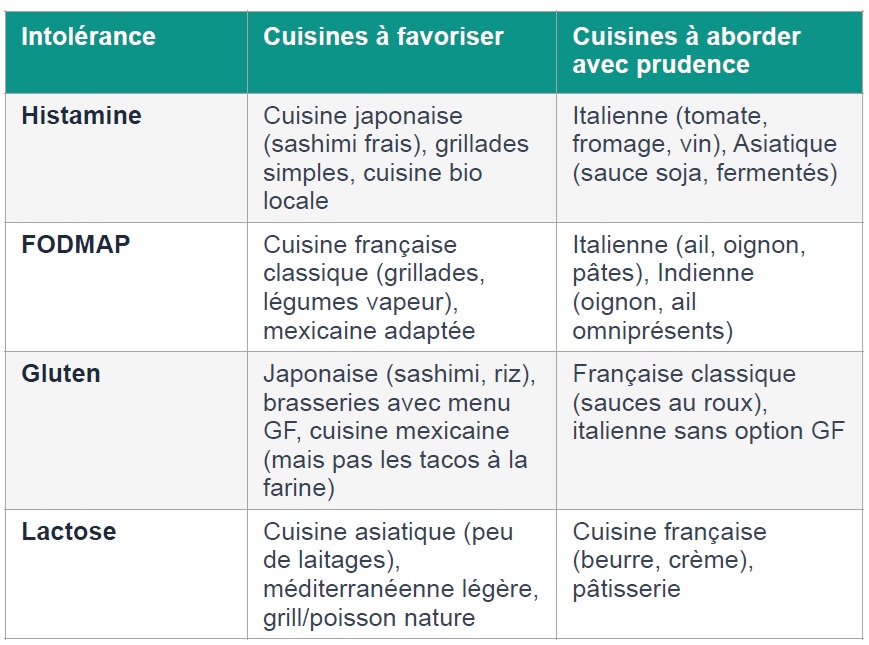
Identify the kitchens best suited to your profile
Depending on your intolerance, some cuisines are naturally more suitable:
2. On-site: how to talk to your server without creating awkwardness
Most servers are trained to handle severe allergies, but far fewer are trained to handle intolerances. Here's how to make your requests effectively:
State a specific request, not a list of restrictions
To avoid
"I have intolerances, I can't eat gluten, lactose, histamine, FODMAPs, garlic, or onions..." → The waiter doesn't know what to suggest.
Preferably
"Is the grilled salmon prepared with butter or oil? And how is the sauce made?" → Specific question about a specific dish.
Questions to keep in mind
- "Is this dish prepared with garlic or onions?" (FODMAP)
- "Is the sauce cream-based or wine-based?" (histamine + lactose)
- "Is the fish fresh or thawed/canned?" (histamine)
- Are the fries cooked in the same oil as the breaded items? (gluten, cross-contamination)
- "Could you serve me the vinaigrette on the side?" (salicylates, histamine)
3. The most frequently problematic dishes (and their alternatives)
Pizza / pasta — high in gluten, histamine and lactose
Alternatively, ask for a plate of grilled vegetables with a plain protein (grilled chicken, fish of the day), without sauce. In an Italian restaurant, fresh beef carpaccio (without capers or vinegar) can be a histamine-friendly option.
Dishes with sauce — often rich in gluten (roux) and lactose (cream)
Alternatively, opt for grilled or steamed fish. Ask for the sauce on the side or without sauce. Grilled fish with olive oil and steamed vegetables is almost universally appealing.
Sushi and rolls — watch out for the sauces
Fresh sashimi is often the safest option for histamine. Avoid bluefin tuna (high in histamine), teriyaki sauces (soy + sugar + vinegar), and soft cheeses in rolls (lactose).
4. The tool that helps you order: Intoleris Restaurant mode
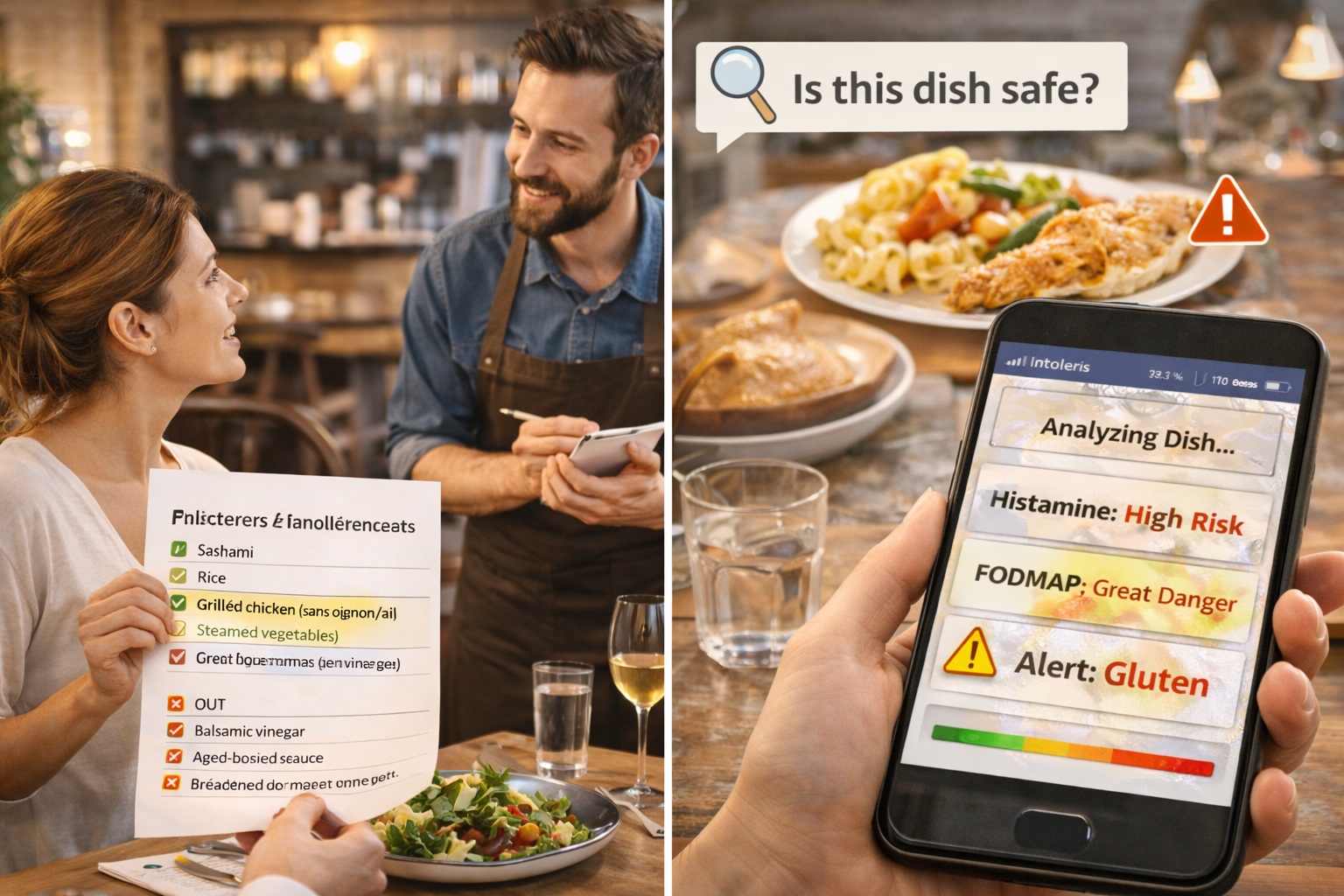
Example
You're hesitating between mussels marinière and grilled salmon. By typing both into IntolerisYou can immediately see that mussels marinière contain white wine (histamine score 3) and the mussels themselves (score 2), while fresh grilled salmon is suitable if prepared without a vinegar-based sauce or
5. After the meal: drawing the right lessons
If you have experienced any symptoms, quickly note them in your history. Intoleris (or in a paper journal): the dish, known ingredients, the time of the meal, the time symptoms appeared, and their intensity. This data, collected over a few weeks, allows you to identify patterns and refine your tolerance profile with your dietitian.
- restaurant food intolerance
- order gluten-free restaurant lactose
- Histamine restaurant FODMAP
- what to order at a restaurant with intolerances
- Restaurant advice for digestive intolerance
- eating out intolerance