Complete guide
How to read a food label (without making a mistake)
Reading a food label can quickly become a headache. Between the complex names, additives, and hidden ingredients, it's difficult to know what you're actually consuming.
Whether you are lactose intolerant, gluten intolerant or simply mindful of your diet, understanding a label is essential to avoid mistakes.
In this guide, discover how to easily decipher food labels and make the right choices.
Understanding the list of ingredients
Ingredients are always listed in descending order of quantity. This means that the first ingredient is the one present in the largest amount in the product. If sugar or a problematic ingredient appears at the top of the list, it should immediately raise your suspicions. Take the time to read the entire list, even if some names sound technical.
Identify the risky ingredients
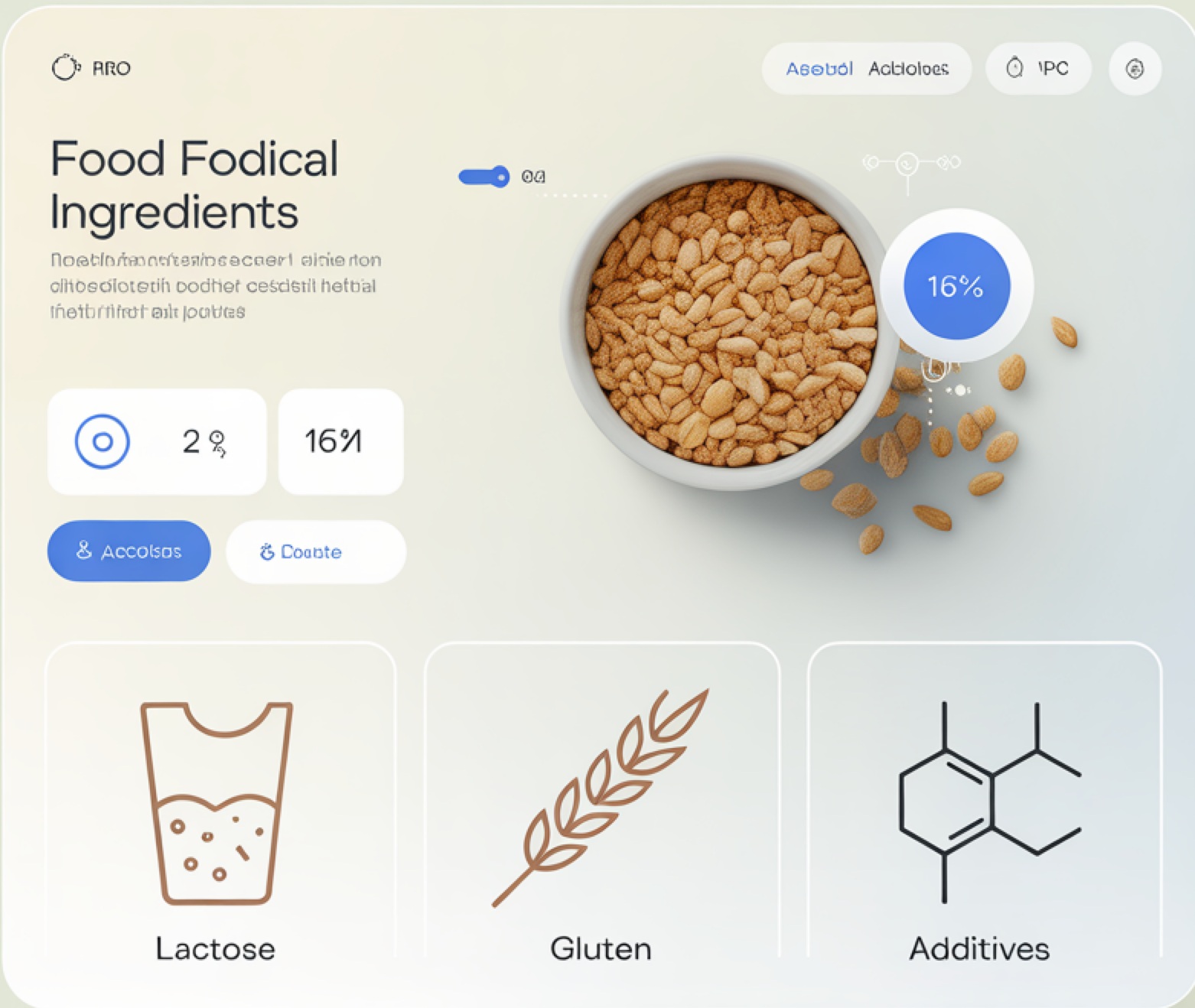
Some ingredients can be problematic, especially in cases of food intolerances:
– lactose (present in milk, whey, and protein)
– gluten (wheat, barley, rye)
– food additives (E621, colorings, preservatives)
– hidden sugars (glucose syrup, dextrose, maltodextrin)
Manufacturers often use complex or technical terms to refer to common ingredients.
For example:
– “whey” = milk derivative (contains lactose)
– “modified starch” = industrially processed
– “Flavors” = often vague composition
Learning to recognize these terms is essential to avoid pitfalls.
Understanding nutritional values
The nutrition table shows you the intake of:
– calories
– fats
– sugars
– proteins
- salt
It is important to check the quantities per 100g and per serving, as the serving sizes can be misleading.
The most common mistakes
Here are the most common mistakes:
– only read the front of the product
– ignore the ingredients in small print
– relying on marketing claims (“no added sugar”, “natural”)
– not checking for allergens
A quick read can easily lead to bad decisions.
A simple solution: use a food scanner
To avoid mistakes and save time, you can use a food scanner. By simply scanning a product's barcode, you get a clear analysis of the ingredients and the risks associated with your intolerances.
👉 Try the scanner Intoleris To analyze your products in seconds:
FAQ
How can you tell if a product contains lactose?
You need to check the ingredients such as milk, whey or milk.
Is gluten always clearly indicated?
Not always, it can be present in derived ingredients.
Is gluten always clearly indicated?
Some may be problematic depending on your sensitivity.